



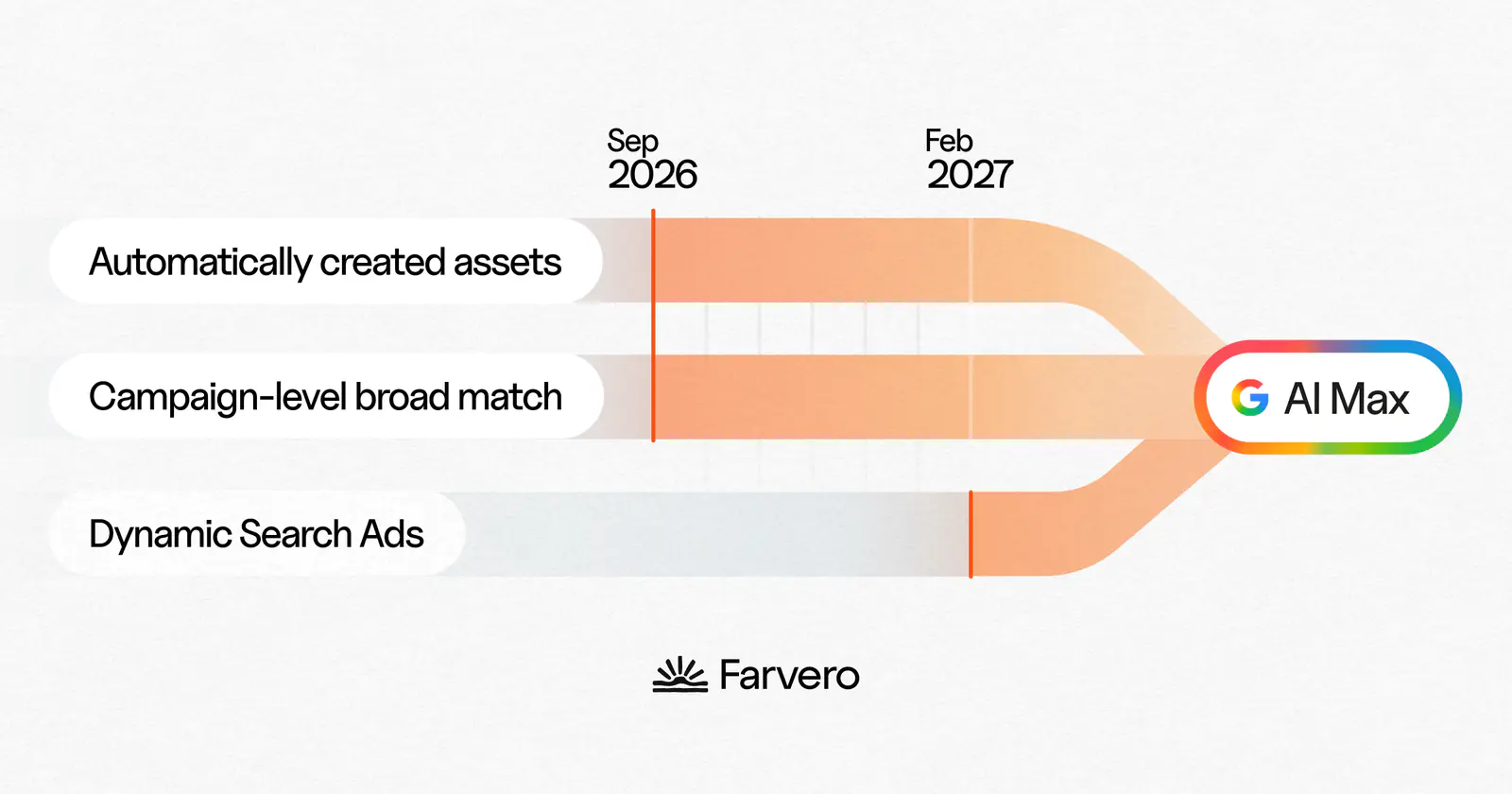
Google delayed the automatic upgrade of Dynamic Search Ads to AI Max from September 2026 to February 2027. The delay does not cover everything. Campaigns using automatically created assets or campaign-level broad match still upgrade automatically starting September 2026. If you only read the delay headline, that is the part you missed.
I run Google Ads for B2C startups, and since the June announcement most conversations about AI Max start from the same wrong assumption: “we have until 2027.” Some accounts do. Many do not, and the ones that flip in September are exactly the accounts where nobody remembers switching the setting on.
Here is the full picture, the numbers Google quotes and the numbers it does not, and what I would do before September.
TL;DR
- Google extended the DSA-to-AI-Max auto-upgrade deadline from September 2026 to February 2027 (announced June 11, 2026).
- The extension does not apply to campaigns using automatically created assets (ACA) or campaign-level broad match. Those start upgrading automatically in September 2026.
- Upgraded campaigns get AI Max features enabled by default: search term matching for everyone, text customization for ACA campaigns, and all three features (including final URL expansion) for DSA.
- Google reports +7% to +27% more conversions or conversion value depending on the segment. An independent analysis of 250+ retail campaigns found +13% median revenue at +16% median CPA, with ROAS outcomes ranging from −35% to +42%.
- The move is not “should I adopt AI Max.” It is “which of my campaigns flip automatically, with which defaults, and is my measurement clean enough to judge the result.”
Two deadlines, not one
The June 11 announcement created a split timeline, and the split is what most summaries flatten:
| What | Auto-upgrade starts | Status |
|---|---|---|
| Dynamic Search Ads campaigns | February 2027 | Delayed |
| Campaigns with automatically created assets (ACA) | September 2026 | Unchanged |
| Campaigns with campaign-level broad match | September 2026 | Unchanged |
The practical problem: ACA and campaign-level broad match are settings, not campaign types. A DSA campaign is easy to spot in your account. An ACA toggle that someone enabled during a campaign build two years ago is not. In my audits, settings like this are the most common source of “wait, since when is that on.”
So the first question is not what you think about AI Max. It is which of your campaigns are in the September group.
What AI Max actually is
AI Max for Search launched in May 2025 as a campaign-level suite of three features. Google is now making it the successor to DSA, expanding beyond landing-page matching to what it calls real-time intent signals.
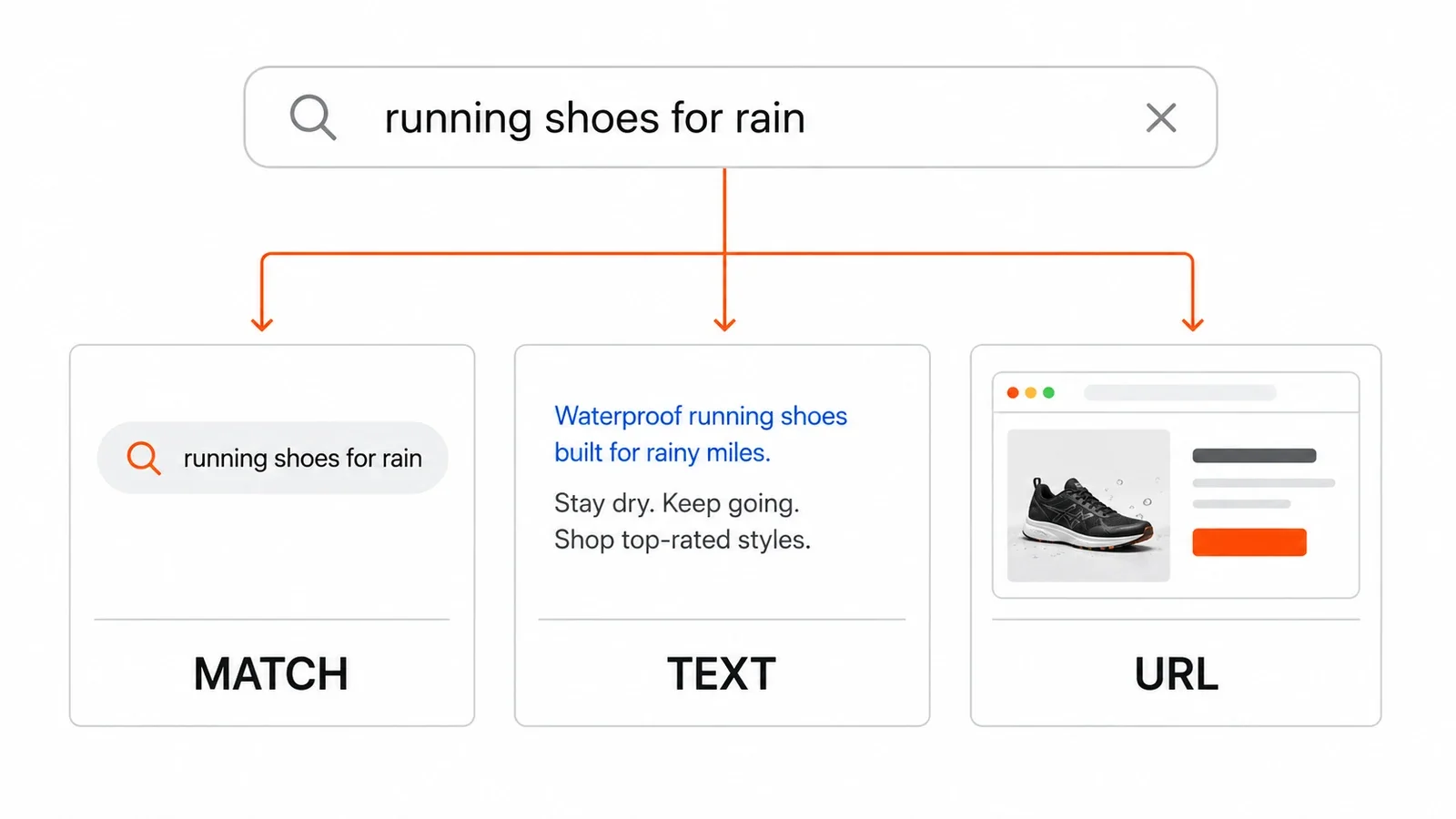
1. Search term matching. Extends your reach with broad match plus keywordless matching, similar to how DSA matched queries against your site content. Your keywords still exist. The system goes beyond them.
2. Text customization. Generates headlines and descriptions in real time with Gemini, based on your existing ads and landing pages. Your manual ad copy stays, but AI-written variants enter the rotation.
3. Final URL expansion. Routes users to whichever page on your site the system considers most relevant, not necessarily the landing page you chose. It requires text customization to be on. When it picks a different URL, your pinned assets are disabled for that ad.
Each feature moves a decision from you to the system. That is not automatically bad. It is exactly the shift that already happened with Smart Bidding: the platform decides more, and the quality of your data decides whether it decides well.
What happens to your campaigns on upgrade
DSA campaigns (February 2027): dynamic ad groups become standard ad groups, settings and historical data port over, and all three AI Max features are enabled. Your legacy URL controls (page feeds, URL inclusions and exclusions) are preserved.
ACA campaigns (September 2026): upgraded with search term matching and text customization enabled by default.
Campaign-level broad match campaigns (September 2026): upgraded with search term matching enabled by default.
Note the pattern. Everything arrives enabled. You can review and adjust features after the upgrade, but the defaults are Google’s, not yours. Voluntary migration before the deadline is the only path where you choose the configuration and the timing yourself.
The numbers Google quotes, and the ones it does not
Google’s own reporting, in its announcement and launch materials:
- Campaigns using the full AI Max suite saw an average of 7% more conversions or conversion value at similar CPA or ROAS, compared to search term matching alone (non-retail advertisers).
- Earlier launch claims: +14% as a broad benchmark, and +27% for campaigns relying mostly on exact and phrase match.
Independent data tells a more honest story. Smarter Ecommerce analyzed 250+ retail campaigns after adoption and found +13% median revenue paired with +16% median CPA, with ROAS outcomes spread from −35% to +42%. Mike Ryan, who led the analysis, described adoption results as “close to a coin toss.”
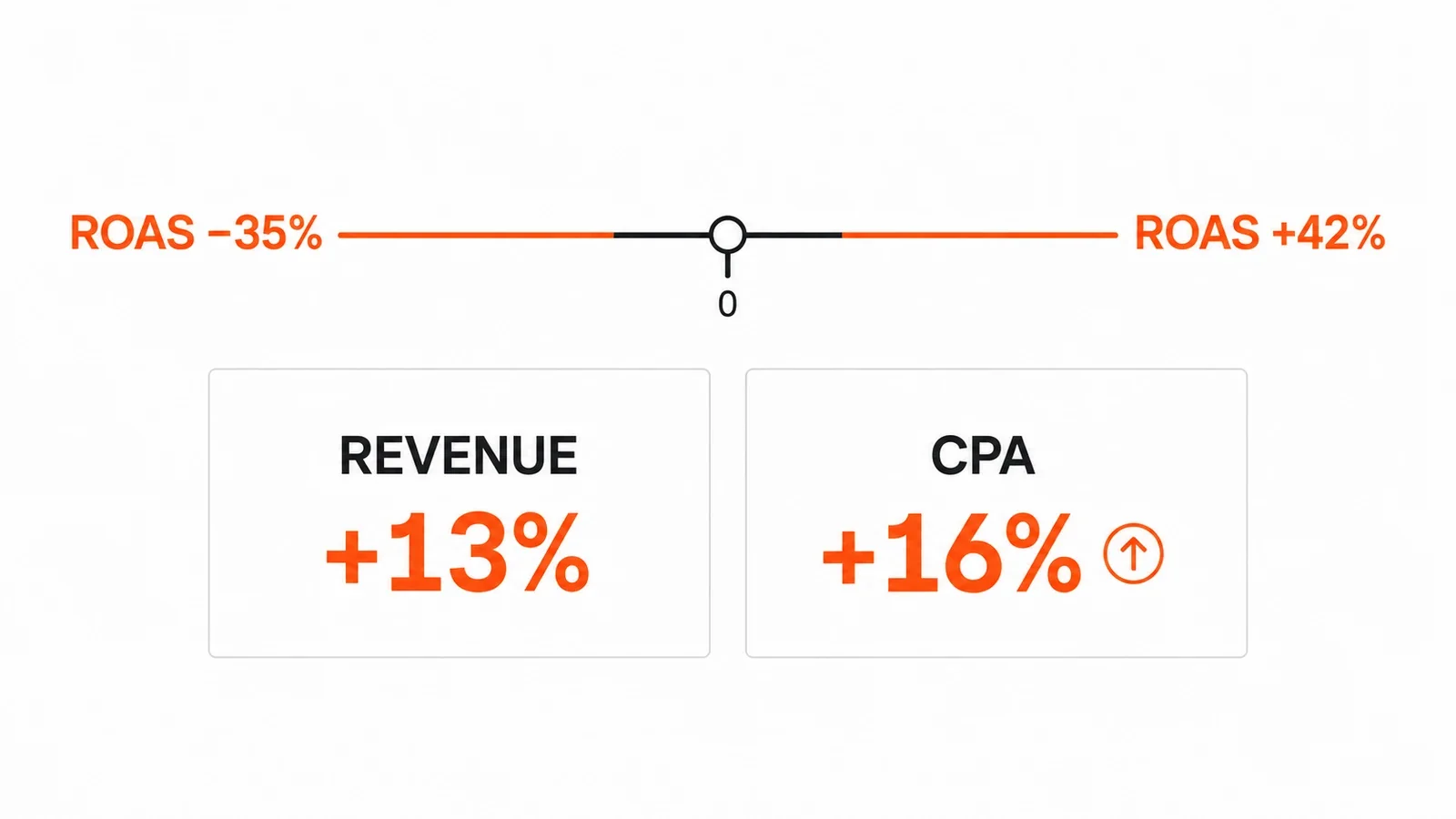
Both things can be true. AI Max finds incremental volume, and it often pays for that volume with efficiency. Whether that trade is good for you depends on your margins, your growth targets, and whether your measurement can even detect the difference. A +13% revenue lift at +16% CPA is a win for a startup chasing growth and a loss for one defending contribution margin. You need to know which one you are.
What I would do before September
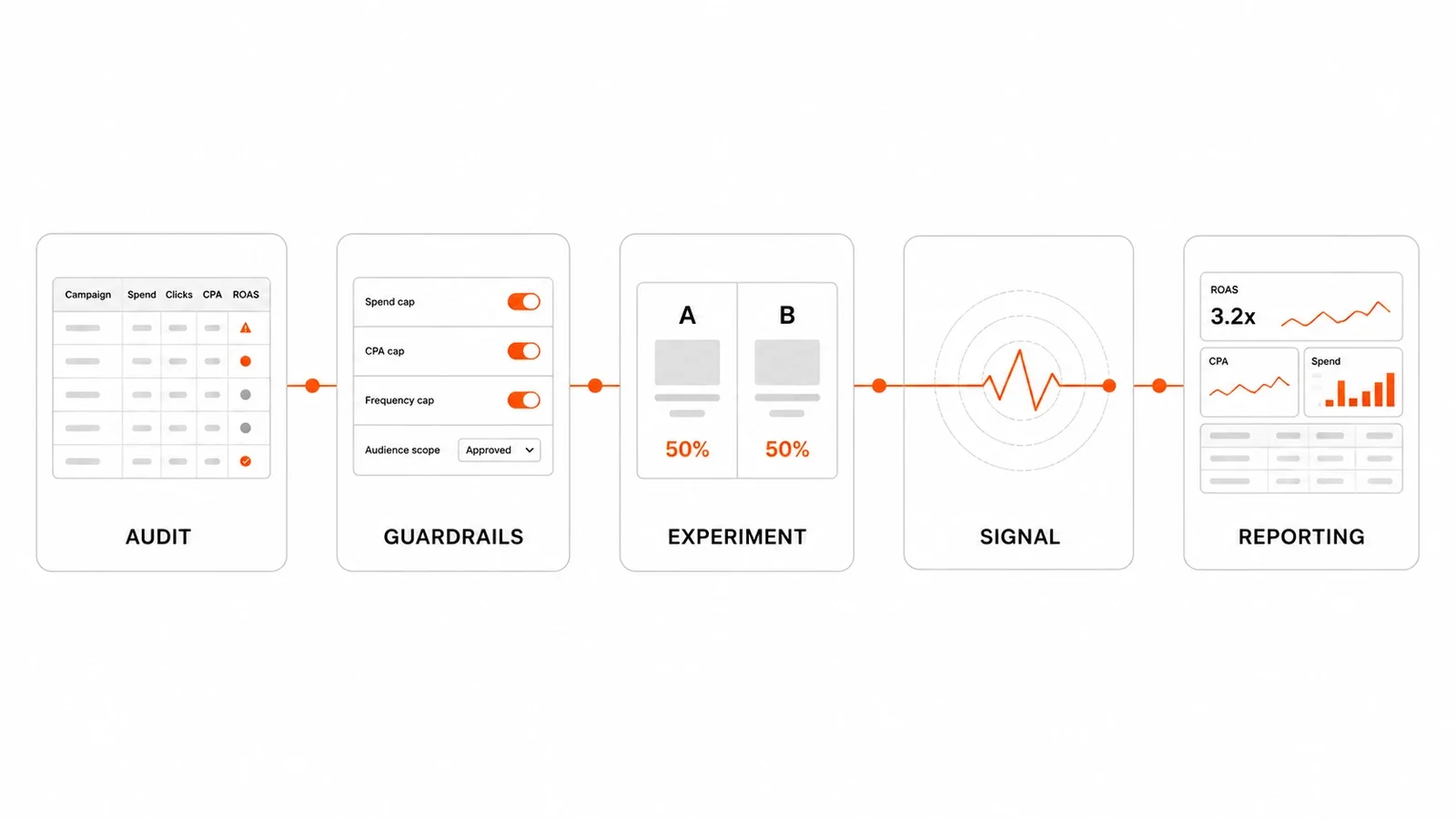
1. Audit your exposure this week. Go through every Search campaign and check two settings: automatically created assets (campaign settings, “Automatically created assets”) and campaign-level broad match. List what flips in September versus February. This takes under an hour in most accounts and removes all the ambiguity from the timeline.
2. Set text guidelines before the defaults arrive. AI Max currently supports up to 25 term exclusions and 40 messaging restrictions per campaign. Write them now: banned claims, competitor names, regulated wording, prices you do not want generated. If text customization switches on automatically in September and your guidelines are empty, Gemini writes your ads with no guardrails on day one.
3. Run the experiment while you still control the baseline. Google offers one-click experiments for AI Max. Use them the disciplined way: equal budget split, run through the learning phase, judge on your business metric (CPA or ROAS on your data, not the platform’s projected uplift). The published variance is wide enough that the only number that matters is the one from your own account.
4. Fix your signal before you hand over more control. Every AI Max feature ultimately optimizes toward your conversion data. If that data is incomplete or wrong, you are automating toward the wrong target, faster. Browser-only tracking still loses 30-40% of conversions to ad blockers, Safari ITP, and consent gating, which is why server-side tracking comes before more automation, not after. Same for values: if every conversion reports “1” instead of its real revenue, AI Max scales volume, not profit.
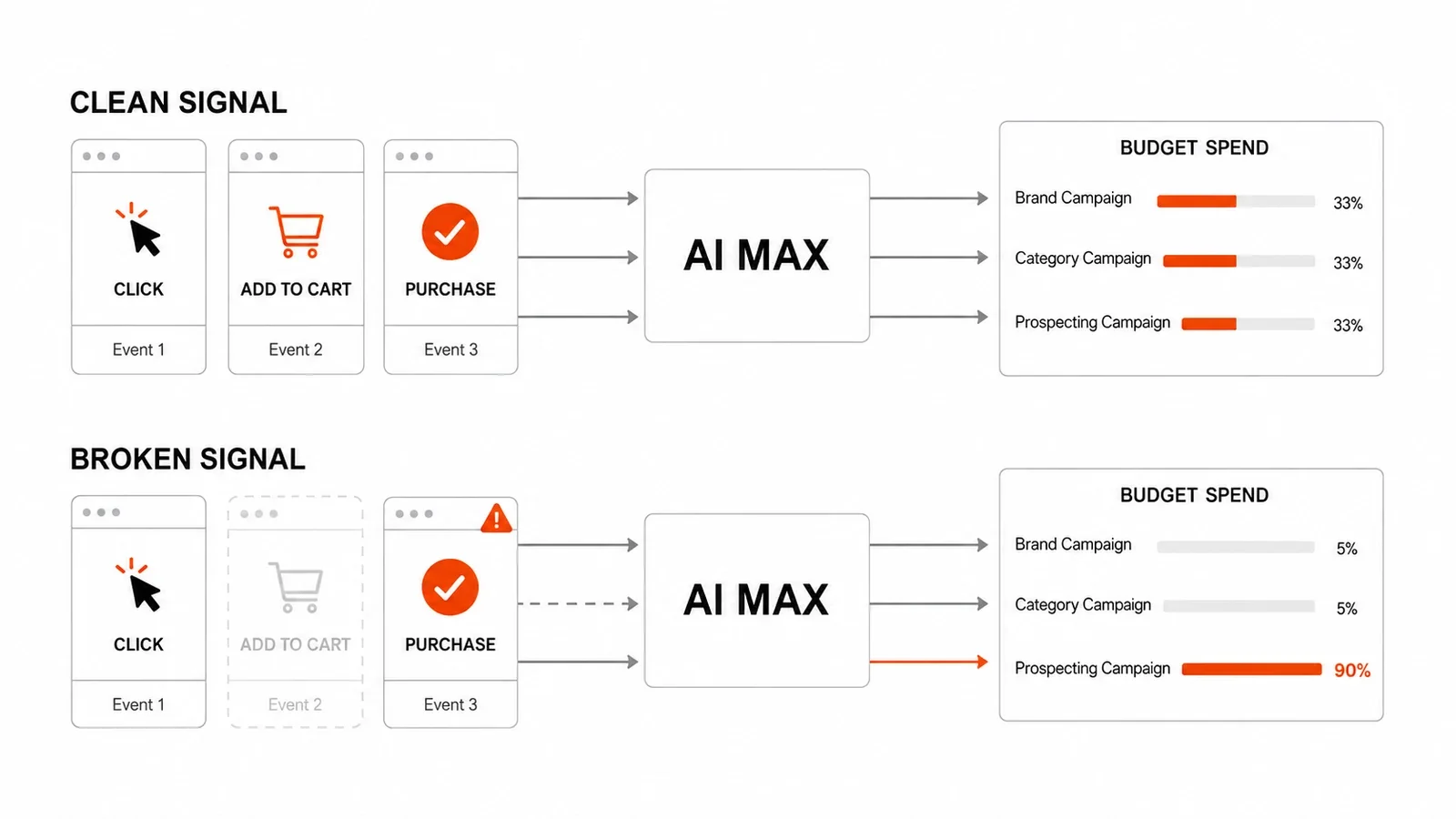
I have seen what automation does when the signal is clean. At GetYourGuide I worked on replacing a rule-based bidding script with a custom ML model: cost dropped 54% and ROAS rose 81%. The lesson was not that automation wins. The lesson was that automation wins when the data feeding it is right.
5. Protect your reporting continuity. Annotate the upgrade date in every reporting surface you use. Post-upgrade search terms, URL-level performance, and asset reporting will not be directly comparable to your pre-upgrade history. If you run month-over-month reporting for stakeholders, flag the break now, before someone asks why October looks nothing like August.
Common mistakes I expect to see
- Treating February 2027 as the only deadline. The September group is larger than most advertisers think, because ACA and broad match are quiet settings, not visible campaign types.
- Letting the defaults decide. Auto-upgrade enables features you never tested, configured, or wrote guardrails for.
- Judging AI Max on platform-reported uplift. The independent spread is −35% to +42% ROAS. Only your own controlled experiment tells you where you land.
- Scaling automation on broken tracking. More automated matching plus more automated copy plus more automated URLs, all optimizing toward conversion data that undercounts by a third, compounds the error instead of fixing it.
- Forgetting the reporting break. Six months from now, someone will compare post-migration performance to pre-migration history and draw the wrong conclusion.
FAQ
Does the delay mean I can ignore AI Max until 2027?
Only if none of your campaigns use automatically created assets or campaign-level broad match. Those upgrade automatically starting September 2026. Check the settings on every Search campaign before assuming you are in the February group.
How do I know which of my campaigns are affected in September?
Check two places per campaign: the “Automatically created assets” setting in campaign settings, and whether campaign-level broad match is enabled. DSA campaigns are affected too, but on the February 2027 timeline.
Can I keep my campaigns off AI Max entirely?
You can migrate voluntarily and configure features yourself, and you can adjust features after an automatic upgrade. What you cannot do is stay on DSA, ACA, or campaign-level broad match as they exist today. Those paths end. The controllable variables are timing, configuration, and guardrails.
Will my keywords stop mattering?
No. Keywords, manual ads, and URL controls remain. AI Max extends beyond them: search term matching reaches queries your keywords do not cover, and final URL expansion can route past your chosen landing page. Your inputs become the floor, not the ceiling.
Is AI Max good or bad for performance?
The honest answer is that published results are wide. Google reports +7% to +27% depending on segment. Independent retail data shows +13% median revenue at +16% median CPA, with outcomes from −35% to +42% ROAS. Run the experiment on your own account. That is the only number that transfers.
Key takeaways
- There are two deadlines. DSA moved to February 2027. ACA and campaign-level broad match still flip in September 2026.
- Upgrades arrive with features enabled by default. Voluntary migration is the only path where you pick the configuration.
- Write your text guidelines and URL exclusions before the migration, not after the first bad headline ships.
- Trust only your own experiment. The published performance spread is too wide for anyone else’s average to guide your decision.
- Automation quality is capped by signal quality. Clean tracking and real conversion values decide whether AI Max scales your profit or your noise.
If you want a second pair of eyes on your exposure before September, I do this as part of every Google Ads and tracking audit. It usually takes one pass through the account to know exactly which group you are in.
Sources: Google, “Dynamic Search Ads are upgrading to AI Max” (updated June 11, 2026); Digital Applied, DSA-to-AI-Max migration playbook; Smarter Ecommerce analysis of 250+ retail campaigns (Mike Ryan).